



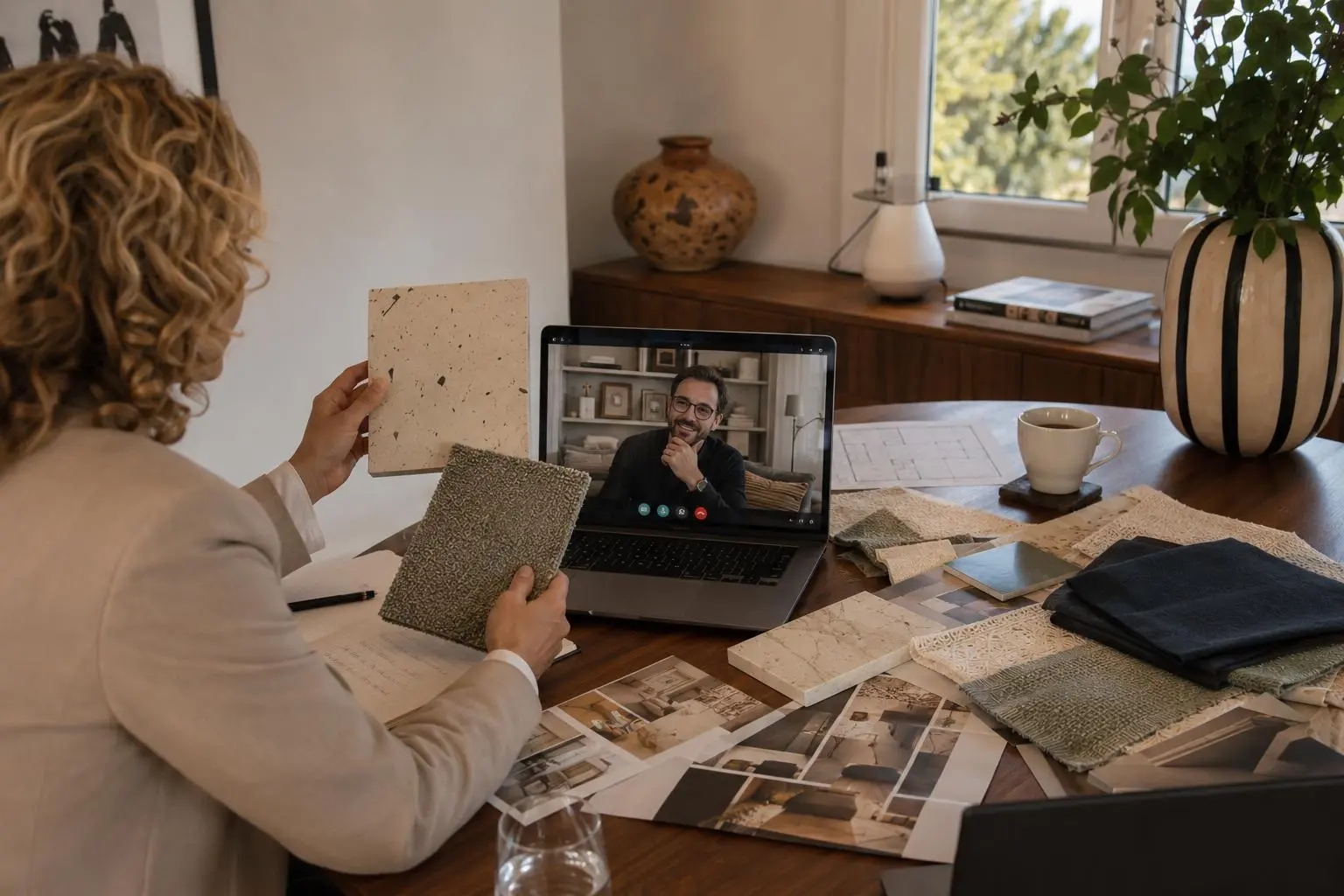
Managing an interior design project remotely in Europe is entirely possible today, provided the studio combines a structured remote collaboration process with real, hands-on execution on the ground. In practice, it means you approve concepts, materials and budgets from wherever you happen to live, while a local team handles suppliers, site visits, trades and delivery. I have run projects this way for clients based in New York, London, Miami and Zurich, all of whom own a residence in Barcelona or along the Spanish and Italian coast. Done well, remote does not mean remote-feeling: it means a project that moves forward every week without you having to be in the country.
In this guide I explain how remote interior design actually works, what to expect at each phase, and what to look for when you engage a designer from abroad.
What managing an interior design project remotely in Europe actually looks like
The perception that a luxury interior needs the client physically present at every turn is outdated. According to the Estadística Registral Inmobiliaria published by the Colegio de Registradores, foreign buyers accounted for 14.1% of residential purchases in Spain in the first quarter of 2025 — with 58.3% of those coming from within the European Union — and a large proportion of those owners do not live here full-time. The industry has adapted accordingly.
A modern remote workflow rests on three pillars: a shared digital workspace where every decision is documented; scheduled video reviews that replace ad-hoc site meetings; and a local project manager — in my case, myself and my Barcelona-based team — who acts as your eyes, ears and hands on the ground. What you gain in return for not being physically present is a level of documentation that in-person projects rarely produce: every material, every finish, every supplier quotation is captured, reviewed and approved in writing.
The three phases of a remote interior project
1. Discovery and brief — entirely remote
The first phase is where I get to know you and your home. We begin with a video consultation, usually 60 to 90 minutes, in which I ask about how you live, how you intend to use the residence, who visits, and what you love and dislike about your current interiors. If you already own the property, I ask for a short video walkthrough filmed on your phone; if you are still buying, I review the estate agent’s floor plans and photographs.
By the end of discovery, you receive a written brief that summarises the scope, the desired atmosphere, a preliminary budget band, and a project timeline. Nothing about this phase requires you to travel.
2. Concept, materials and design — remote with structured reviews
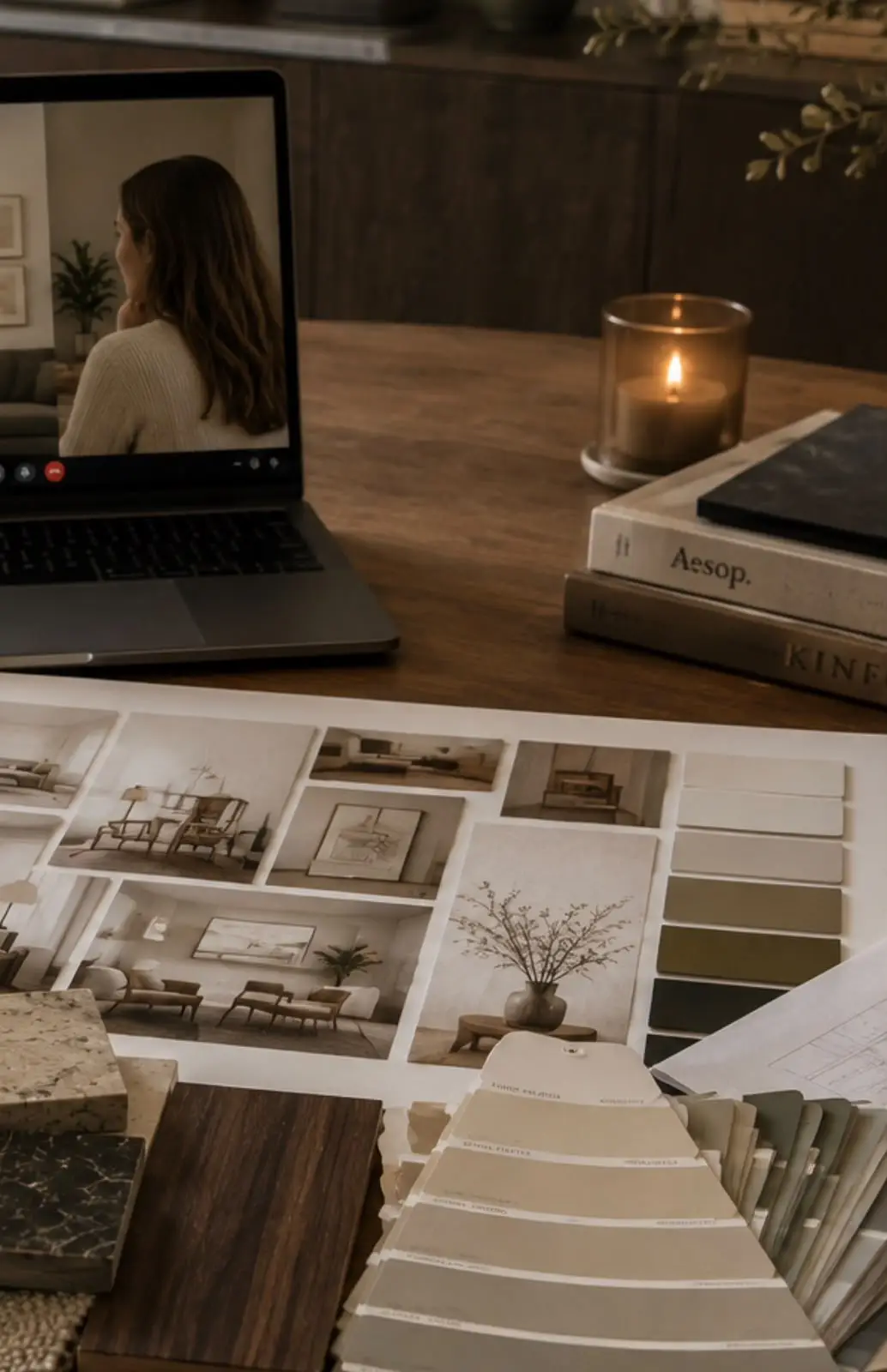
This is where remote interior design earns its reputation. I present concept boards, layouts, 3D visualisations and material palettes through a shared platform. Material samples — stone, timber, textiles, brass finishes — are photographed under natural light and, on request, couriered to your home address so you can hold them in your hand before approving.
Reviews are scheduled: typically one 45-minute video call per fortnight during the design phase. In between calls, decisions are made asynchronously in the shared workspace. This rhythm suits time-zone differences and busy schedules far better than trying to align calendars for on-site meetings.
3. Execution — local, on the ground, on your behalf
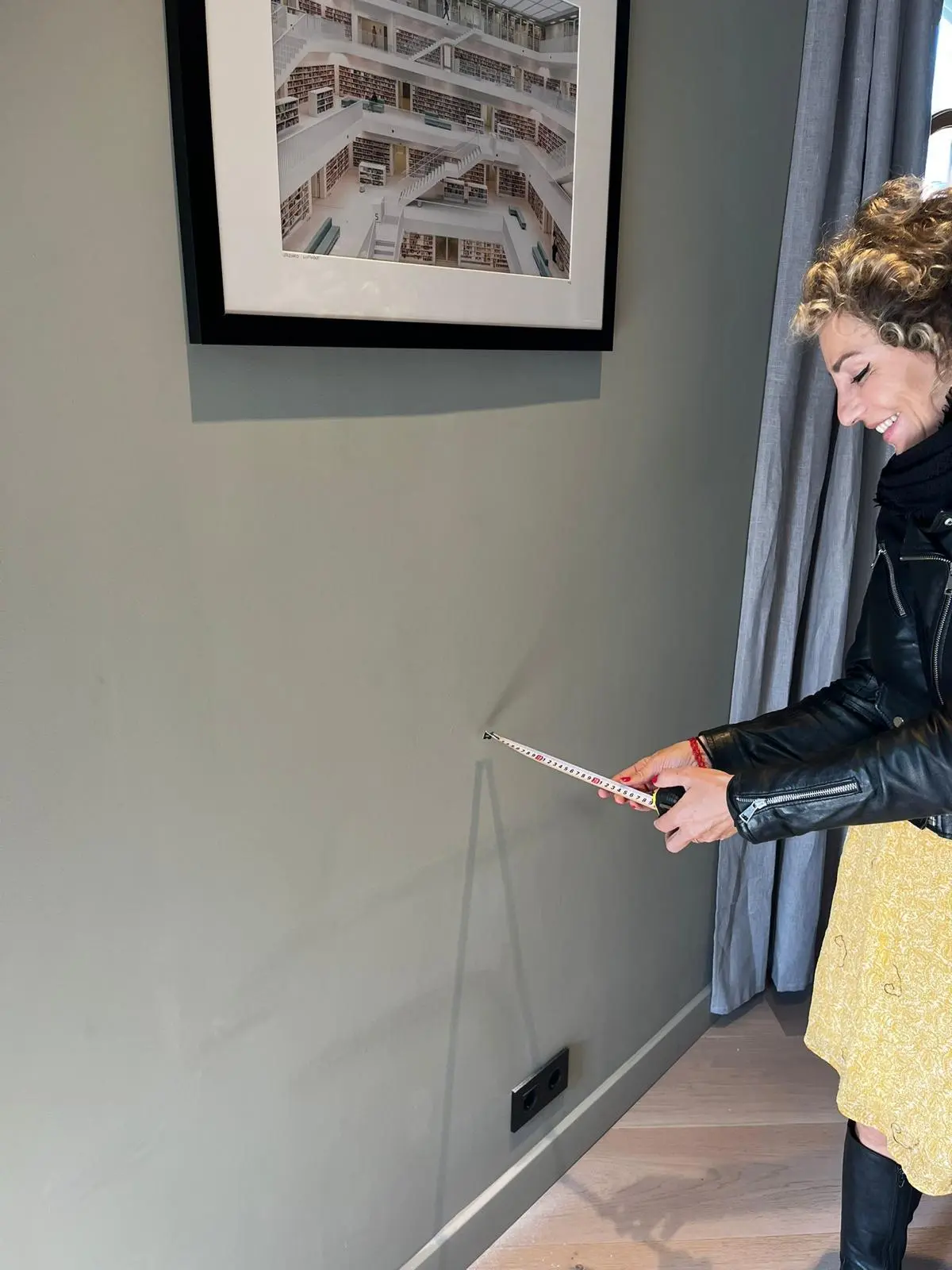
This is the phase where remote projects succeed or fail. Concept approval means little if no one is on site making sure the tiler laid the pattern correctly or that the joiner used the specified brass hardware rather than a cheaper substitute. My studio manages procurement, coordinates trades, attends every site visit, and issues weekly progress reports with photographs and short video clips. You approve variations in writing before they happen, not after.
The result is that you can travel, work and live your life abroad while the project progresses on schedule. For most of my overseas clients, one or two visits over the course of a six to nine-month project — typically at the concept sign-off and again near completion — are all that is required.
Tools and rhythms that make remote collaboration work
The tools themselves matter less than the discipline of using them consistently. In my studio we work with a shared project workspace where every drawing, sample, supplier quote and approval lives in one place. Video reviews are recorded so nothing is lost in translation. Weekly written updates go out every Friday, with photographs, decisions pending, and a clear list of what I need from you in the coming week.
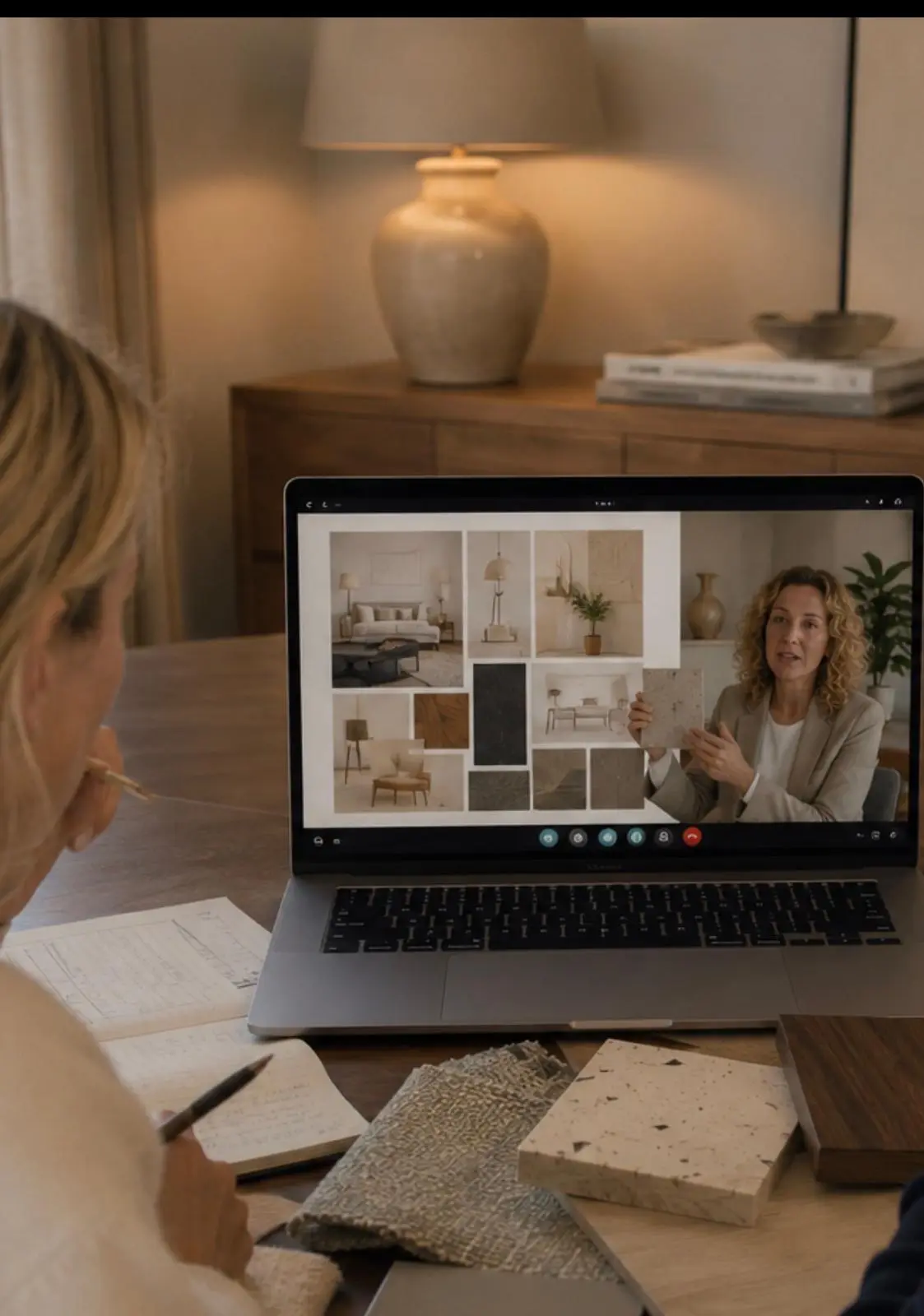
What overseas clients tell me they value most is not the technology but the predictability: they know when to expect an update, they know where to find any document, and they know that no decision is being made without their sign-off. This is the same discipline I apply when furnishing a second home in Europe, where the client is almost always managing the process from elsewhere.
What to look for in a remote-ready interior designer
Not every studio is set up for remote work with overseas clients. Before you engage anyone, ask the following.
- Do they have a local team on the ground? Remote coordination without a physical presence at the site is not remote design — it is delegation to strangers.
- Is there a single point of contact? You should never be routed through three assistants for a straightforward question.
- How are approvals documented? Verbal agreements on video calls are not enough. Every material, budget line and variation should be captured in writing.
- What is the reporting cadence? A weekly written update is the minimum during the works phase.
- Do they speak your language fluently? This sounds obvious, but nuance in materials, atmosphere and craftsmanship gets lost across a translation layer.
These principles are built into my full-service interior design for international clients, which is designed from the ground up around the reality that most of my clients are not in Spain when the project is underway.
When remote works — and when you still need to fly in
I am honest with clients about this. Two moments in a project genuinely benefit from being present in person. The first is at final concept sign-off, when standing in the actual rooms with the material palette in hand tells you more in twenty minutes than three video calls. The second is at the pre-installation walkthrough, shortly before furniture and art are placed, when small adjustments to lighting or wall finishes are still easy to make.
Everything else — discovery, layout, materials, procurement, works supervision, delivery — I have run entirely remotely for clients who could not travel, and the outcomes have been indistinguishable from projects with a locally based owner. What matters is not where you are but that the studio you engage treats remote as a first-class way of working, not an inconvenience.
Frequently asked questions
What does managing an interior design project remotely in Europe involve?
It means the client approves concepts, materials, budgets and variations remotely — through video reviews and a shared digital workspace — while a locally based studio handles suppliers, site visits, trades and installation on the ground. Decisions are documented in writing, and weekly reports keep the client informed without requiring travel.
How many times will I need to visit Spain during the project?
For most of my overseas clients, one or two visits over a six to nine-month project are sufficient — typically at concept sign-off and again shortly before completion. Everything else runs remotely.
How do I approve materials without seeing them in person?
Samples are photographed under natural light and, on request, couriered to your home address so you can inspect stone, timber, textiles and finishes before signing off. Nothing critical is decided from a screen alone.
What happens if something goes wrong on site?
My team is on site regularly and flags issues immediately with photographs and a proposed solution. You approve any variation in writing before it is executed. Nothing is changed retroactively without your consent.
Is remote interior design more expensive?
No. The fee structure is the same as an in-person project. What changes is where the client’s time is spent — on scheduled video reviews rather than site meetings — not the total cost.
Ready to start?
If you own or are about to buy a residence in Spain and are wondering how a full luxury interior project can run smoothly while you remain abroad, I would be glad to talk it through. Book a consultation and we will use the first call to understand your project and how remote collaboration would work in your specific case.