



Furnishing a second home in Europe means designing and equipping a property you don’t live in full-time — often from another country — so that it feels complete, considered and genuinely ready to enjoy the moment you walk through the door. The most reliable way to do it is to treat the whole thing as a single planned project rather than a string of shopping trips: decide how you’ll really use the home, set an honest budget and timeline, choose what to keep and what to replace, and then either manage the sourcing and delivery yourself or hand the entire process to a designer who works locally on your behalf.
I say this as someone who does exactly that for a living. A large part of my Barcelona practice is furnishing and finishing homes for owners who live somewhere else — a family in London with an apartment on the coast, an American couple who have bought a villa near the sea, a European buyer who visits a handful of times a year. The design questions are the same as for any home. What changes is the distance, and distance is where second-home projects tend to go wrong. This guide is how I approach it.
Start with how you’ll actually use the home
Before a single sofa is chosen, I want to understand the life the house has to hold. A second home used for two long summers a year is a different brief from one visited for scattered weekends, and both differ again from a property you intend to let when you’re not there.
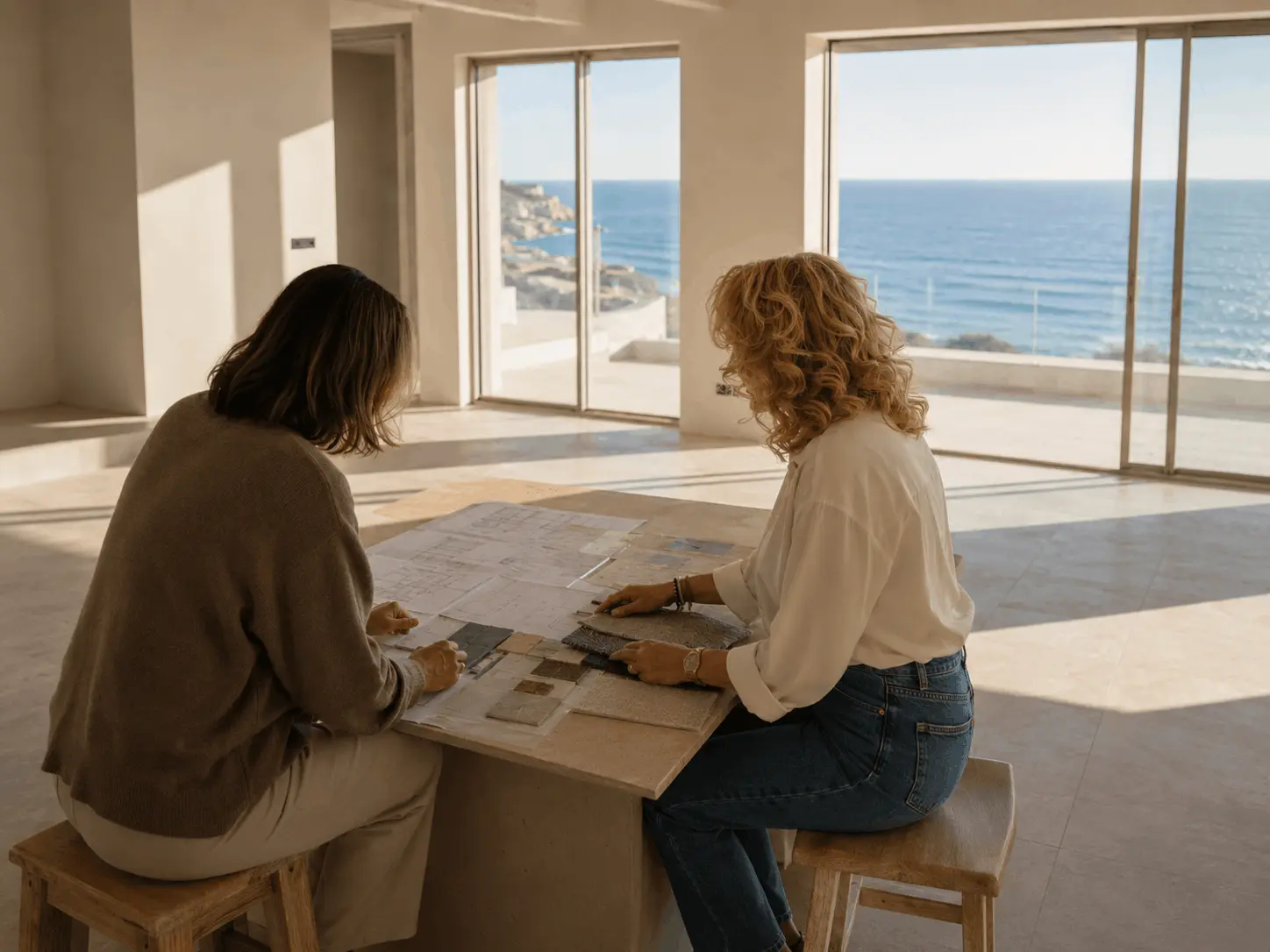
The questions I ask first are practical. How many people sleep here at peak, and how often is that? Are there children, or guests who arrive in waves? Will you cook properly or eat out? Is the home ever rented, and if so, does it need to survive strangers and turnovers? The answers decide almost everything downstream — how robust the fabrics must be, how many beds and bathrooms need to work hard, whether the kitchen is a showpiece or a service space. A holiday home that photographs beautifully but can’t take a wet swimsuit and a full house is a failure, however lovely it looks.
The real challenge is furnishing from a distance
Furnishing a primary residence is forgiving. You live with the space, notice what’s missing, adjust over years. A second home abroad offers none of that. You have a few concentrated visits, a language you may not speak, tradespeople you’ve never met, and deliveries that have to land in a country you’re not standing in.
This is why the piecemeal approach — buy a bit each visit, order the rest online — so often stalls. Measurements get guessed. A wardrobe arrives that won’t fit the lift. A sofa is three weeks late and you’ve already flown home. Snags pile up with no one on the ground to chase them. I’ve been called in to rescue plenty of half-furnished homes where the owner simply ran out of visits before the house was liveable.
The alternative is to compress the decisions into one properly managed project and let someone local carry it while you’re away. Much of that coordination can now happen without you present at all — I regularly work with an interior designer remotely with clients I meet in person only once or twice across an entire project.
A practical sequence, from first visit to move-in
Here is the order I follow when furnishing a second home in Europe. Keeping to a sequence is what stops a project from fragmenting into a hundred unrelated purchases.
1 · Survey and brief. On the first visit I measure everything, photograph every wall, note the light through the day, and agree the brief: how the home will be used, what stays, what goes, and the feeling you want when you arrive. This is also when structural questions surface — if the property needs work beyond furnishing, that runs on a separate track (I cover the building side in my guide to renovating a home in Spain).
2 · Concept and palette. I develop a single design direction — materials, colour, mood — so that every later decision answers to one idea rather than to impulse. For a home by the Mediterranean that usually means natural materials, warm neutrals and restraint, but the concept is always drawn from the specific house and owner.
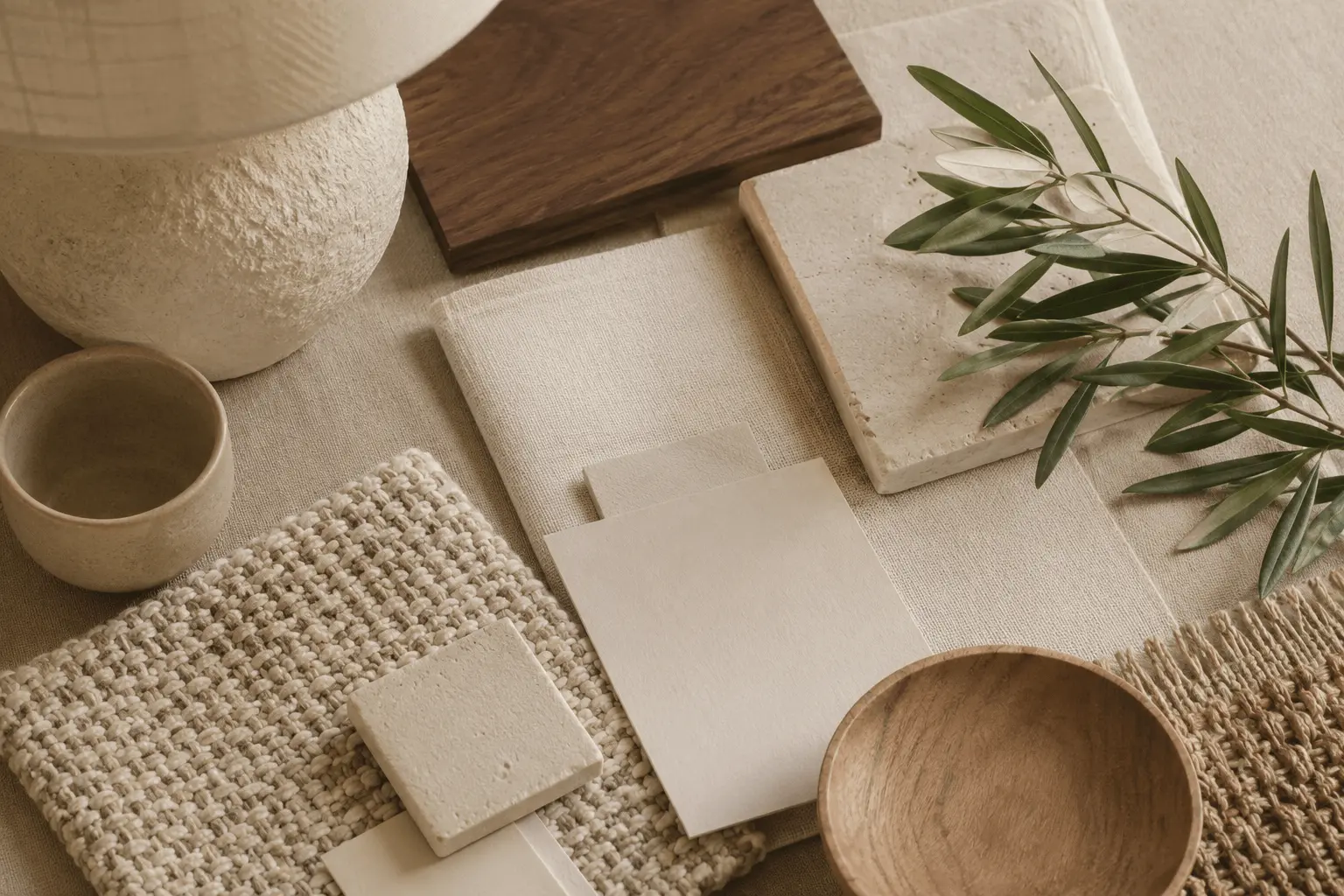
3 · Budget and timeline. We agree a realistic figure and a delivery date built backwards from when you actually want to use the home. Lead times on quality furniture in Europe are long; a made-to-measure sofa can take eight to twelve weeks, so the calendar matters as much as the money.
4 · Sourcing. I select and specify everything — furniture, lighting, textiles, rugs, the small things that make a room feel finished — mixing bespoke pieces where they earn their place with well-chosen ready-made items elsewhere.
5 · Logistics and installation. Orders are placed, tracked and consolidated; deliveries are received and checked here, not by you from abroad; damaged items are returned and chased. The house is then installed in one coordinated push rather than dribbled in over months.
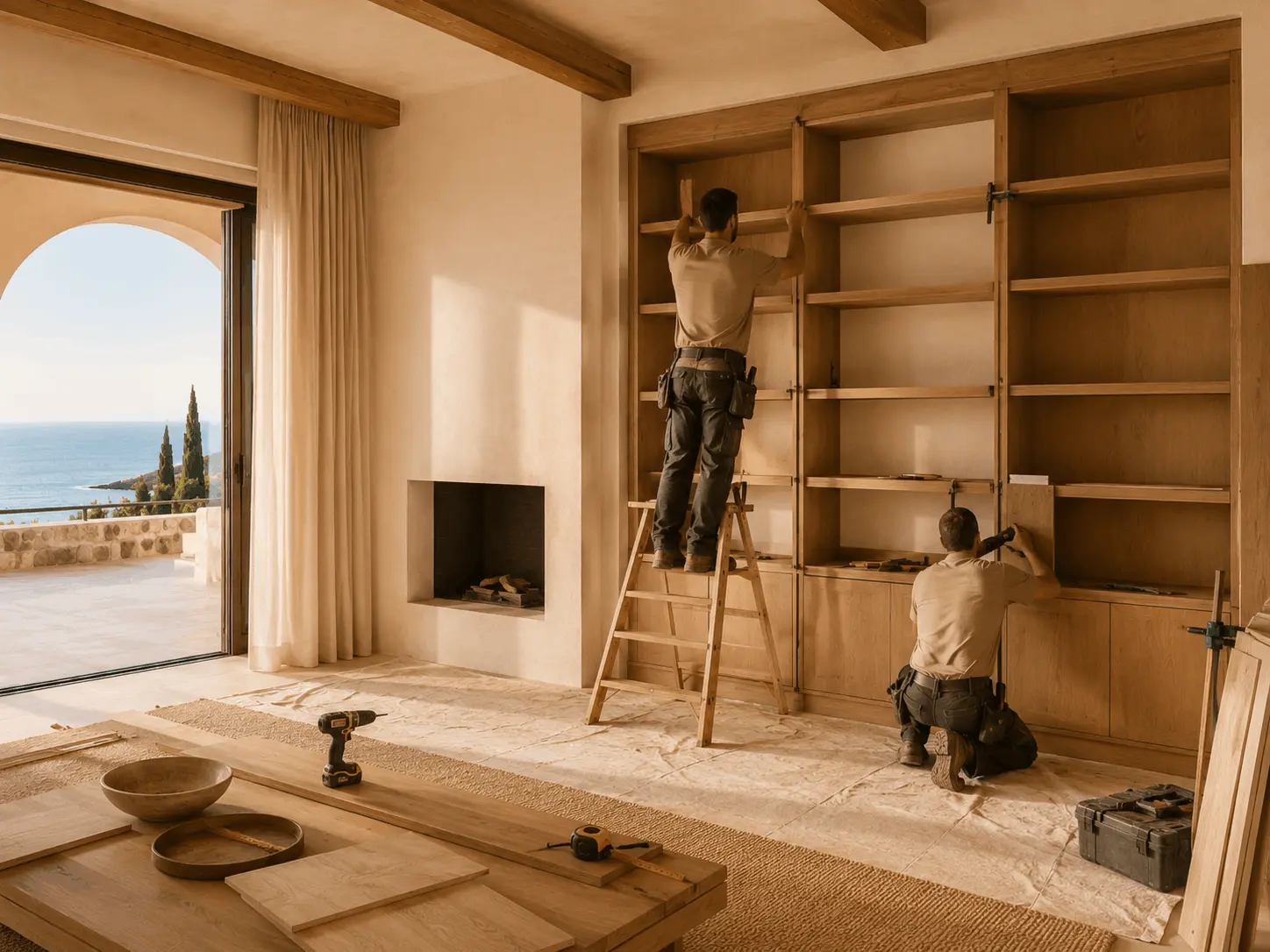
6 · Styling and handover. The final layer — art, books, cushions, the objects that stop a home feeling like a showroom — goes in last. You arrive to a finished house, not a to-do list.
Buy once, buy well: what’s worth investing in
Owners furnishing from a distance often ask where to spend and where to hold back. My answer rarely changes.
Spend on the pieces you touch and use most, and on anything difficult to replace later. Beds and mattresses come first — a second home lives or dies on how well guests sleep. Then the primary sofa, the dining table, and any built-in joinery, because these set the quality of a room and are painful to swap once installed. Good lighting is the cheapest way to make a house feel expensive, so it’s never where I economise.
You can be relaxed about accessories, seasonal textiles and secondary bedrooms, where a lighter budget rarely shows. The mistake is inverting this — spreading money thinly across everything so that nothing feels considered. A smaller number of well-made pieces will always read as more luxurious than a house full of compromises.
Working with an interior designer for a second home in Europe
You can absolutely furnish a second home yourself. Whether you should depends on your time, your distance and how finished you want the result to feel. Hiring an interior designer for a second home in Europe buys you three things you can’t easily arrange from abroad: a single coherent design, someone local to receive deliveries and manage tradespeople, and a project that reaches completion instead of stalling on your next flight.
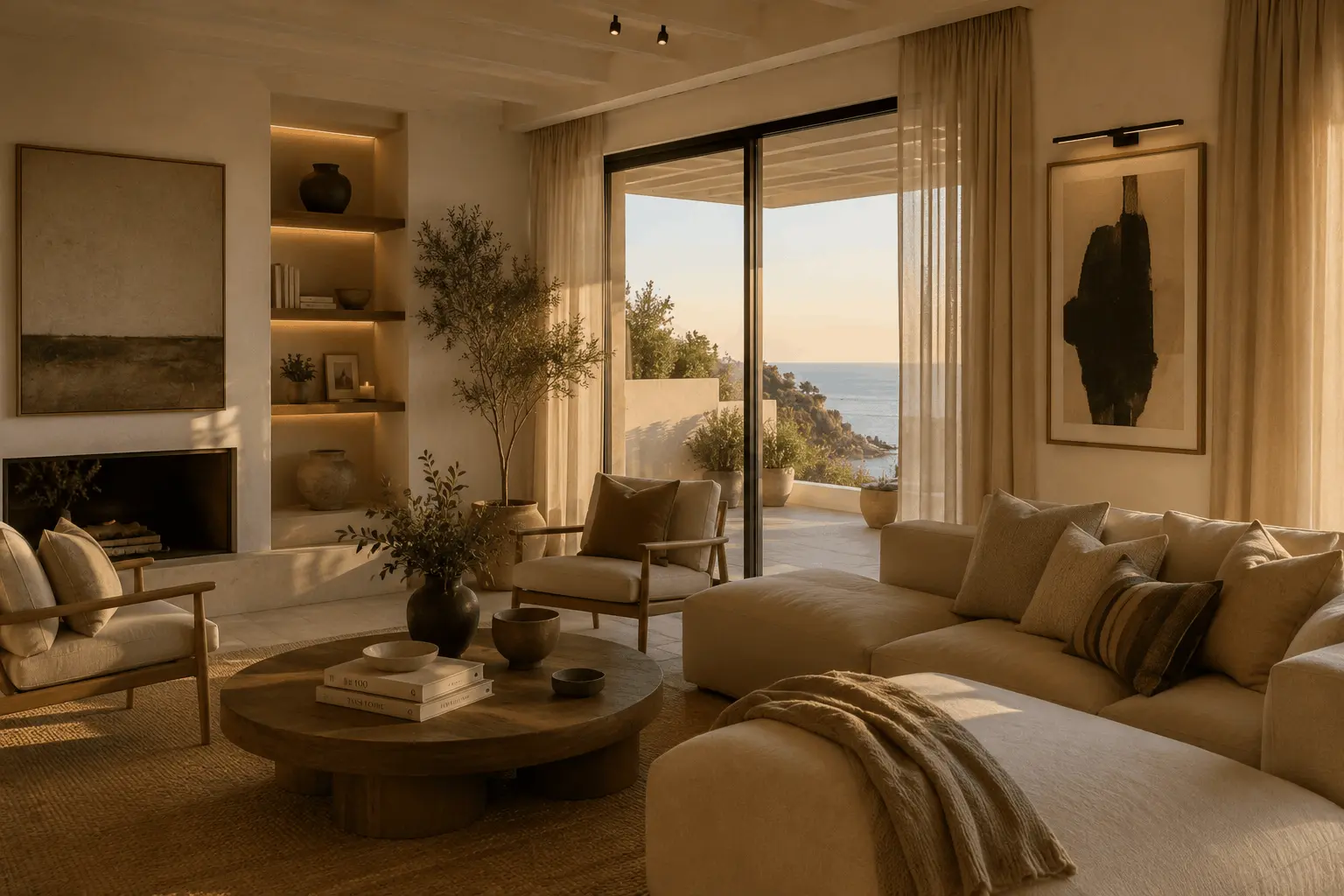
My own process is built for owners who aren’t here. It begins with a free consultation, after which I send a written proposal within fifteen days setting out the concept, scope, timeline and a clear per-project fee — so you know exactly what the work involves and what it costs before committing. From there my studio handles sourcing, logistics, installation and styling, and reports to you throughout. You approve the direction; I carry the weight of making it happen on the ground in Barcelona and along the coast.
How this differs from a furniture package or home staging
It’s worth being precise here, because “furnishing a second home” gets confused with two cheaper, faster services that are not the same thing.
A furniture package — the kind often sold alongside new-build apartments — drops a pre-selected set of items into a home to make it usable. It’s quick and it’s generic: the same package appears in dozens of properties, chosen to offend no one and to express nothing. Home staging goes further in the wrong direction — it dresses a house to sell or to photograph, prioritising the camera over the people who’ll actually live there.
What I do is neither. It’s a bespoke, made-to-measure design built around one owner and one house, meant to be lived in for years rather than sold or let sight-unseen. The difference shows in every decision: a package asks what fills the room, while design asks how you want to feel when you arrive. For a home you’ve chosen deliberately, in a country you love enough to buy into, the second question is the only one worth answering.
FAQ
What does it mean to furnish a second home in Europe?
Furnishing a second home in Europe means fully designing and equipping a property you use part-time — usually from another country — so it feels complete and ready to enjoy from the first visit. Done well, it’s handled as one planned project covering concept, budget, sourcing, delivery and installation, rather than as separate shopping trips over several visits.
How do I furnish a home abroad if I can’t be there?
Compress the decisions into a single managed project and let someone local carry it out. A designer working on your behalf receives and checks deliveries, coordinates tradespeople and installs the home in one push, so nothing depends on you being physically present. Much of the process — briefing, concept, approvals — can be run remotely, with only one or two in-person visits.
How long does it take to furnish a second home in Europe?
For a furnishing-only project, typically two to four months, driven mostly by furniture lead times — quality made-to-measure pieces in Europe often run eight to twelve weeks. If the home also needs building or renovation work, the overall timeline is longer and planned as a separate phase.
Is it worth hiring an interior designer for a second home?
If you live abroad and want a finished, coherent home rather than an ongoing project, usually yes. A designer gives you one unified design, a local presence to manage deliveries and trades, and a defined completion date — the three things hardest to arrange yourself from another country.
Bespoke or ready-made furniture for a holiday home — which is better?
Both, used deliberately. Invest in bespoke or high-quality pieces where they earn it — beds, the main sofa, joinery, key materials — and choose well-made ready-made items for accessories and secondary rooms. A few considered pieces read as more luxurious than a home furnished entirely from a single generic package.
Thinking about furnishing a home you’ve bought in Spain or elsewhere in Europe? Book a consultation — it’s free, and you’ll have a written proposal within fifteen days.