



Bespoke interior design means a home shaped entirely around you — your life, your space and your taste — rather than assembled from a catalogue. Instead of adapting your needs to fit ready-made products, a bespoke designer creates the layout, joinery, furniture and material palette to measure, so that every element belongs precisely where it is. The result is an interior that fits like a tailored suit: made for one person, one home, and no one else.
The word “bespoke” gets used loosely, so it’s worth being clear about what it genuinely involves — and where it makes a difference you can actually see and feel. Here’s what tailor-made interior design really means, and how to judge whether it’s worth it.
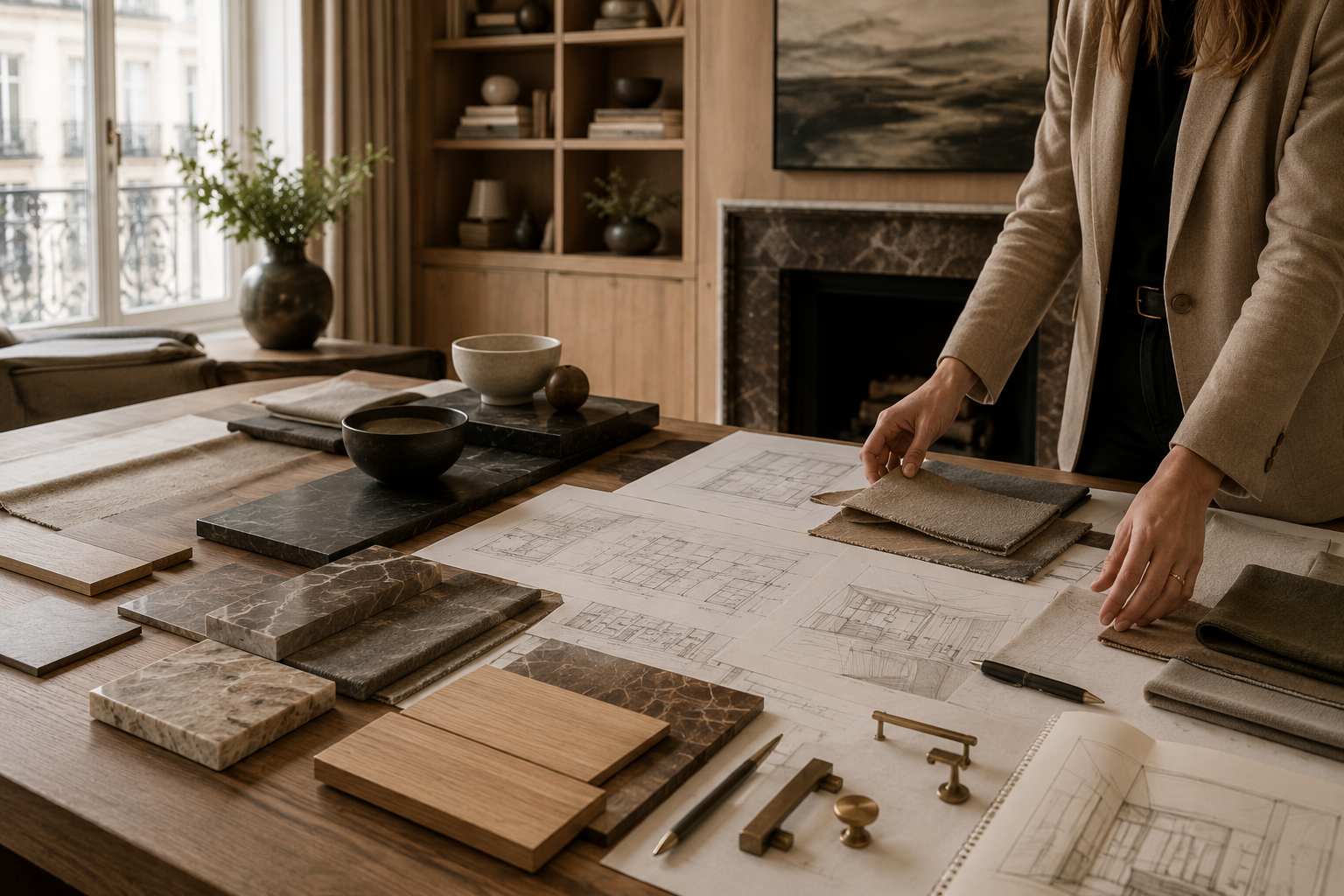
What “bespoke” means in interior design
“Bespoke” comes from the idea of something being spoken for — commissioned specifically for one person. In interior design, it means the home is designed from your requirements outward, not selected from what already exists.
That’s a fundamental shift in starting point. A standard interior begins with available products and fits your life around them. A bespoke interior begins with you — how you cook, work, rest and entertain; the proportions of your rooms; the light you have; the way you want the space to feel — and then designs everything to serve that. Nothing is a compromise imposed by a catalogue.
It’s also more than “custom,” a distinction people often blur. Custom usually means personalising an existing product — choosing the fabric, size or finish of something that already comes in variations. Bespoke means designing the thing itself from scratch, with no template underneath. Custom picks from options; bespoke creates the options. And standard or off-the-shelf means taking the product exactly as it comes. All three have their place, but only bespoke is truly shaped around you.
Bespoke vs. off-the-shelf
The clearest way to understand bespoke is to compare it with the off-the-shelf approach most homes default to.
- Starting point. Off-the-shelf starts with the product and adapts your space to it. Bespoke starts with your space and your life, and designs the product to fit.
- Fit. Off-the-shelf leaves the awkward gaps, the not-quite-right dimensions, the filler panels. Bespoke fills the space exactly, using every centimetre with intention.
- Function. Off-the-shelf offers the functions the manufacturer decided on. Bespoke gives you the functions you need, arranged the way you actually live.
- Materials and quality. Off-the-shelf is built to a price point for a mass market. Bespoke is built to a standard, in materials chosen to last and to age well.
- Character. Off-the-shelf appears in thousands of identical homes. Bespoke exists nowhere else.
None of this makes off-the-shelf “bad” — it’s efficient and often sensible for parts of a home. But where fit, function and longevity matter most, the difference between the two is the difference between adequate and right.
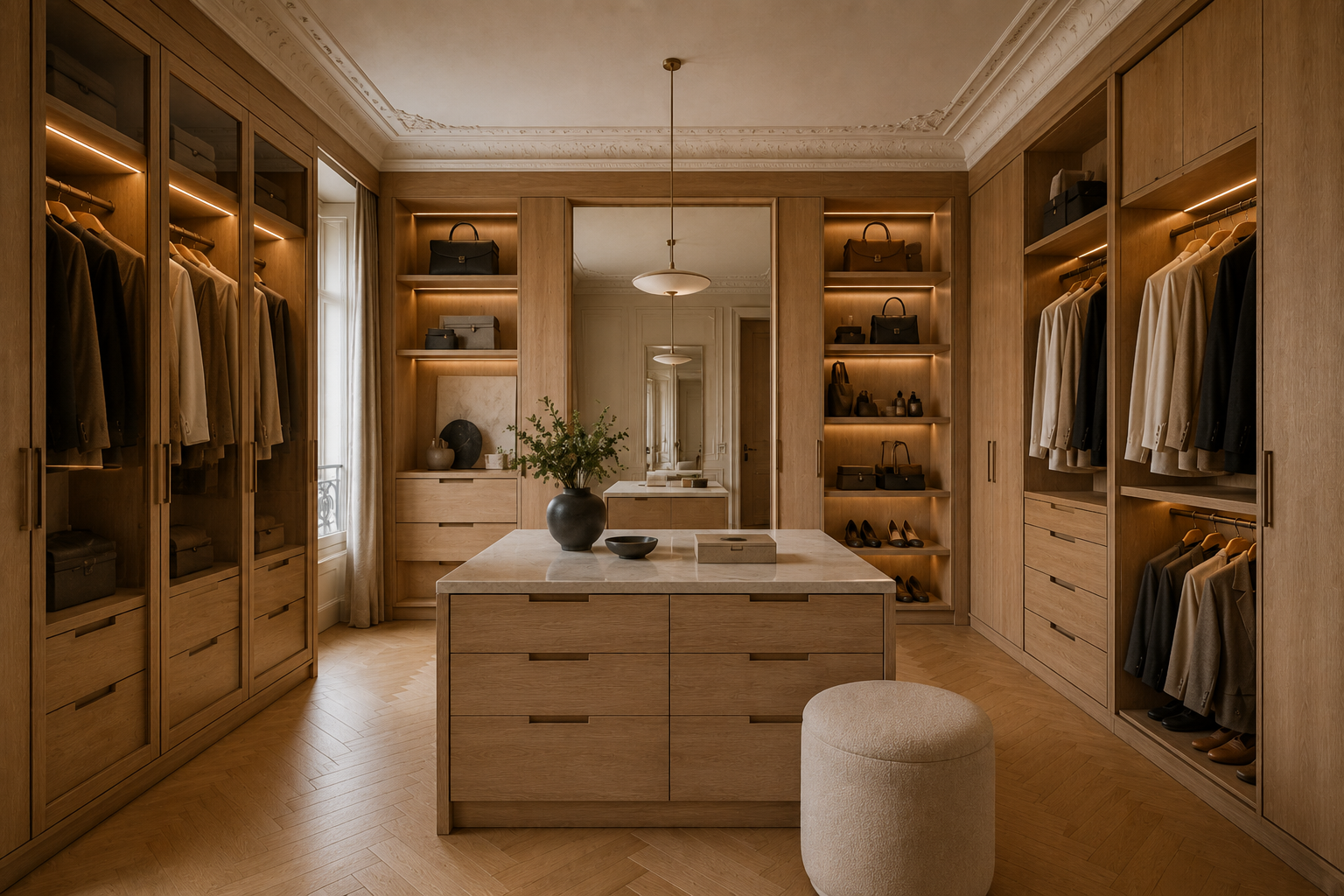
Where bespoke makes the real difference
Bespoke isn’t equally valuable everywhere. These are the areas where it genuinely transforms a home.
Joinery. This is where bespoke earns its reputation. Wardrobes built into the exact wall, a kitchen designed around how you cook, bookshelves that follow an awkward slope, storage that turns dead corners into usable space. Fitted, made-to-measure joinery is often the single biggest upgrade a home can receive — it looks seamless and works perfectly because it was made for that spot and no other.
Furniture. A sofa sized to your room rather than the showroom, a dining table built for your family and your space, a headboard designed to the exact wall. Bespoke furniture resolves the proportion problems that off-the-shelf pieces create, and it lets material and comfort be chosen for you rather than for a mass market.
Layout. The most invisible and most important bespoke decision. Reworking how a home is organised — where walls, openings, light and circulation go — so the space finally works for the way you live. No product can fix a layout; only design can.
Materials. A bespoke material palette is selected specifically for your home: the right stone, wood, plaster and textile for your light, your climate and your taste, and coordinated across the whole project so everything belongs together. This is exactly where a full-service, tailor-made approach pays off — and where it matters most for international clients, whose homes must respond to a specific setting, light and lifestyle rather than a generic one.
The bespoke process
Because everything is made rather than bought, the process is more considered — and that’s the point.
It begins with deep understanding: a designer spends real time learning how you live, what you need, and how you want the home to feel. From there, the design is developed to measure — layouts, joinery drawings, furniture specifications, material palettes — and refined with you until the scheme is exactly right.
Then it’s made. Craftspeople and specialist workshops produce the pieces to specification, and the designer coordinates and supervises the whole thing: sourcing, ordering, timing, on-site execution and quality control, right through to installation and styling. As a full-service, tailor-made service, this means one designer holds the entire project — from the first conversation to the moment everything is in place — so the vision arrives intact and nothing is lost in translation. For clients managing a home from another country, that single point of responsibility is often the difference between a project that works and one that unravels.
It asks for a little more patience than filling a room from a showroom. In return, you get a home that could only ever have been yours.
Is bespoke worth it?
The honest answer depends on where you apply it — and bespoke is at its best when used deliberately rather than everywhere.
Yes, made-to-measure costs more upfront than off-the-shelf. But the comparison isn’t purely about price; it’s about value over time. Bespoke pieces are built in better materials to a higher standard, so they last far longer and don’t need replacing as trends and cheaper items wear out. They use space that would otherwise be wasted, which in a considered home has real worth. And they deliver a fit, function and quality that off-the-shelf simply can’t — the daily, lasting pleasure of a home that works perfectly around you.
Thought of that way, bespoke is less an expense than an investment in longevity and fit, much like timeless design itself. The smart approach is to invest in bespoke where it matters most — joinery, key furniture, the layout and materials that define the home — and use off-the-shelf sensibly elsewhere. That’s how a tailored home is built: deliberately, not indiscriminately.
If you’d like a home designed entirely around you, book a consultation and we can explore what a bespoke, tailor-made interior could mean for your space.
Frequently Asked Questions
What is bespoke interior design? Bespoke interior design is an approach where the home is designed entirely around the client — their life, space and taste — rather than assembled from ready-made products. Layout, joinery, furniture and materials are created to measure, so every element fits precisely and the interior is unique to one person and one home.
How is it different from custom design? Custom design usually means personalising an existing product by choosing its size, fabric or finish from set options. Bespoke design means creating the piece from scratch with no template, shaped entirely to your requirements. In short, custom selects from existing options while bespoke designs the options themselves.
Is bespoke interior design more expensive? Bespoke typically costs more upfront than off-the-shelf, because pieces are made to order in higher-quality materials. Over time, though, it often represents better value: bespoke pieces last longer, use space that would otherwise be wasted, and deliver a fit and function ready-made products can’t match. The smart approach is to invest in bespoke where it matters most.
What can be made bespoke in a home? Almost anything can be made bespoke, but it makes the biggest difference in joinery (fitted wardrobes, kitchens and storage), key furniture sized to the room, the overall layout, and a material palette chosen specifically for your home. These are the elements where a tailor-made approach most transforms how a space looks, works and lasts.