



A luxury interior designer plans, designs and manages a high-end residential project from first concept to final delivery. That means far more than choosing colours and furniture: it includes understanding how you live, reworking layouts and lighting, selecting materials, producing a complete design proposal, sourcing and coordinating suppliers and craftspeople, managing budget and timeline, and supervising the work on site until every detail is right.
If you’re considering hiring a designer for the first time, it’s completely normal not to know what you’re actually buying — or where a designer ends and a decorator or architect begins. Here’s an honest look at what the role involves, how a project unfolds, and when it makes sense to bring a designer in.
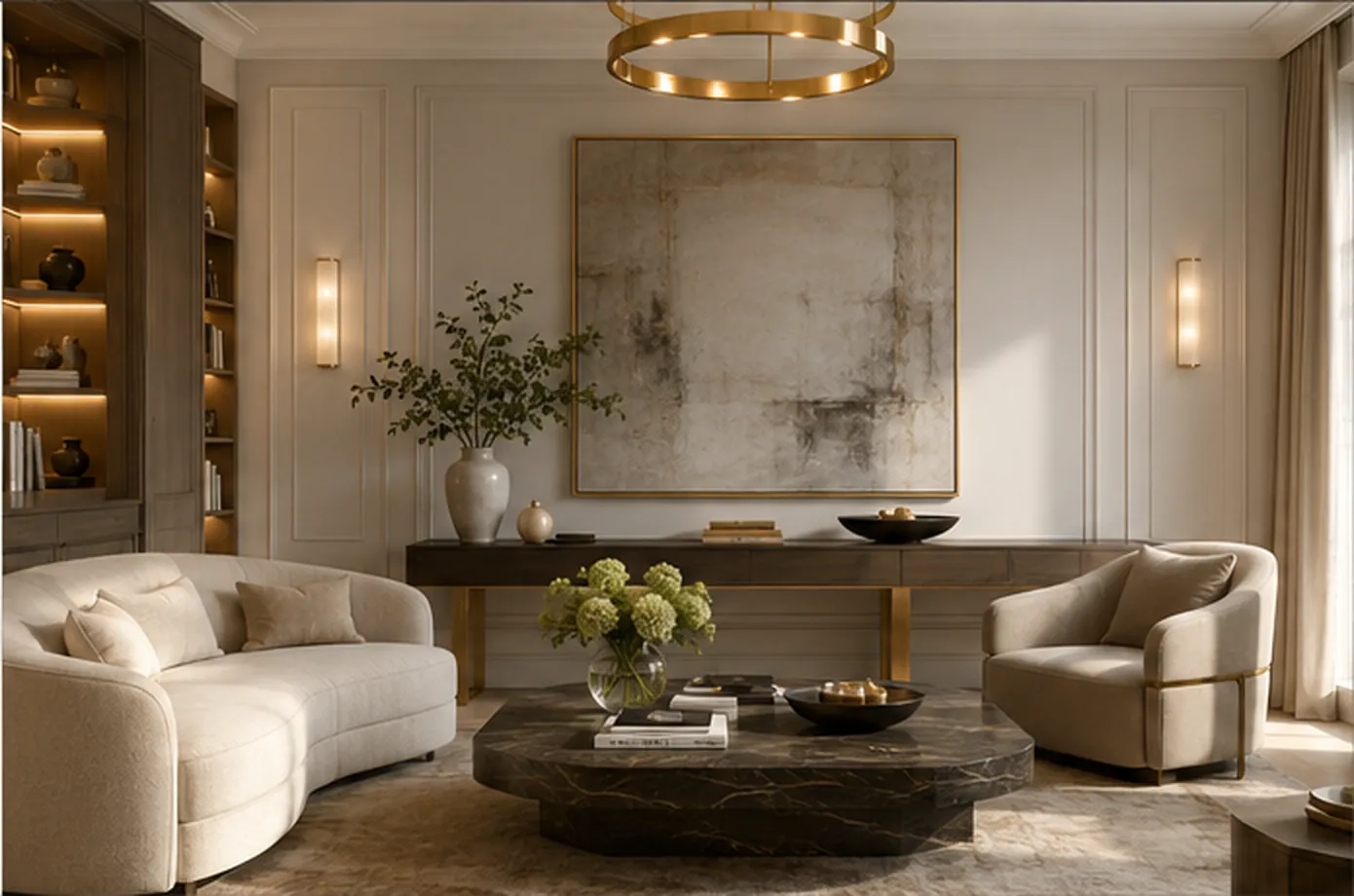
Beyond decoration — the real role of a luxury designer
Decoration is the visible layer. It’s the part everyone sees in photographs, and it’s the smallest part of the job.
The real work of a luxury interior designer begins much earlier, with questions rather than objects: How do you actually use this home? Where does the light fall, and at what times? What’s blocking the space from working? A designer reads a home as a system — circulation, proportion, light, storage, materials, atmosphere — and then designs a coherent answer.
That’s why the role is closer to authorship than to shopping. A designer takes responsibility for the whole: the layout that makes a room breathe, the lighting plan that makes it feel warm at night, the materials that will still look beautiful in fifteen years, and the hundred small decisions that make a space feel considered rather than assembled. Furniture and fabrics come last, once the thinking is done.

The phases of a luxury project
Every project is different, but the structure is consistent. This is how I work:
1. Consultation. We begin with a conversation — free of charge and free of obligation. I want to understand the home, how you live in it, what isn’t working, and what you’re hoping for. This is also where we’re both honest about scope, ambition and budget, so nothing is a surprise later.
2. Proposal. Within around 15 days, I present a proposal: the design direction, the scope of work, the phases, and a clear picture of investment and timeline. You see exactly what the project involves and what it will cost before committing to anything.
3. Design. This is the deep work. Layouts and space planning, lighting design, material and finish selection, custom joinery, furniture and art curation — developed into a complete, coherent scheme with drawings, moodboards and specifications. You review, we refine, and we lock the design before a single thing is ordered.
4. Execution. The design becomes real. Suppliers and craftspeople are engaged, orders placed, works scheduled, and the site supervised. I manage the process through to installation and styling, and I don’t consider a project finished until the last detail is resolved.
The result is a single point of responsibility from first idea to the moment you walk in and it simply works.
What a designer manages that you never see
Most of a designer’s time is spent on things that never appear in the final photographs — and this invisible work is precisely what you’re paying for.
Suppliers and craftspeople. A luxury project involves joiners, upholsterers, stone specialists, lighting suppliers, painters, artisans and more. A designer knows who’s genuinely good, negotiates with them, briefs them precisely, and holds them to the standard. Access to that network is not something you can buy off a shelf.
Budget management. A designer protects the budget by directing it where it matters, flagging trade-offs early, and preventing the expensive mistakes — a wrong order, a misjudged size, a finish that doesn’t survive daily life. Done properly, this frequently saves more than it costs.
Coordination and timing. Deliveries, lead times, trades arriving in the right sequence, decisions made before they become urgent. Someone has to hold the whole choreography in their head; if you hire a designer, that person isn’t you.
Problem-solving on site. Reality always intervenes. A wall isn’t where the plan says, a material arrives with the wrong finish, a lead time slips. A designer absorbs these problems and resolves them — often before the client even hears about them.
Quality control. Finally, someone must look at the work and say this isn’t good enough yet. That’s the designer’s job, and it’s the difference between a nice room and a genuinely refined one.
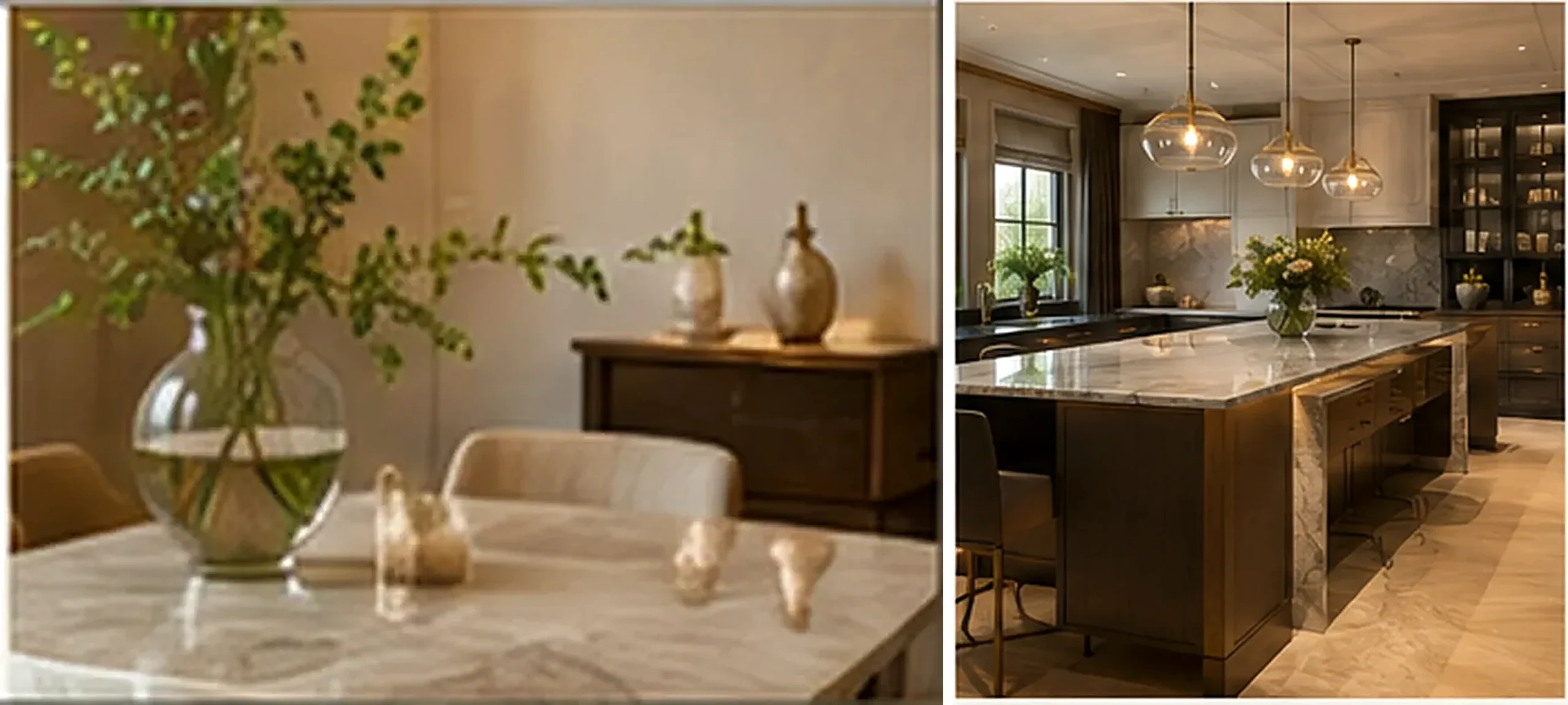
Designer vs. decorator vs. architect
The three are often confused, so let’s be precise.
An architect works on the building itself: structure, envelope, planning permissions, load-bearing walls, extensions. Anything structural or regulatory belongs to the architect.
An interior designer works on the space within the building: layout and circulation, lighting, materials, joinery, atmosphere and the complete scheme — plus the management of the project that delivers it. A designer can reconfigure non-structural walls, redesign a kitchen, and shape how a home actually feels and functions.
A decorator works on the finishing layer: colour schemes, furniture, fabrics, accessories. This is a valuable service, but it operates on top of an existing layout rather than rethinking it.
In simple terms: the architect defines the shell, the designer designs the life inside it, and the decorator dresses it. Where a project needs structural change, a designer and architect work side by side — and part of the designer’s role is coordinating that relationship on your behalf.
When to bring a designer in
The honest answer is: earlier than most people do.
The most common — and most expensive — mistake is calling a designer once the works have started, the layout is fixed and the kitchen has been ordered. At that point, the best decisions are already off the table, and the designer is left optimising within constraints that never needed to exist.
Bring a designer in at the beginning, before demolition, before the plans are frozen, before the big purchases. That’s when a designer can change the layout that will define how you live in the home for the next twenty years — and when their involvement is worth the most.
You also don’t need a full renovation to justify one. Designers work at many scales: a single room, a furniture and lighting scheme, a partial refresh, or a complete home. The right question isn’t “is my project big enough?” — it’s “do I want this done properly?”
If you’d like to talk through your home and see whether we’re a good fit, meet Angela — the first conversation is free, and you’ll leave it with a clear sense of what’s possible.
Frequently Asked Questions
What does a luxury interior designer do? A luxury interior designer plans, designs and manages a high-end residential project from concept to completion. This includes space planning, lighting and material selection, custom joinery and furniture curation, plus sourcing suppliers, managing budget and timeline, coordinating craftspeople and supervising the work on site until every detail is delivered to standard.
What’s the difference between a designer and a decorator? A decorator works on the finishing layer — colours, furniture, fabrics and accessories — on top of an existing layout. An interior designer rethinks the space itself: layout, circulation, lighting, materials and joinery, and also manages the project and the suppliers who deliver it. Decoration is one part of a designer’s work, not the whole of it.
Do I need a full renovation to hire one? No. Interior designers work at many scales, from a single room or a furniture and lighting scheme to a complete home. A full renovation isn’t a requirement; what matters is whether you want the space resolved properly rather than assembled piece by piece.
How does the process start? It starts with a free consultation — a conversation about your home, how you live and what you want to achieve, with no obligation. From there, a written proposal follows within roughly 15 days, setting out the design direction, scope, timeline and investment, so you can decide with full clarity before committing.